
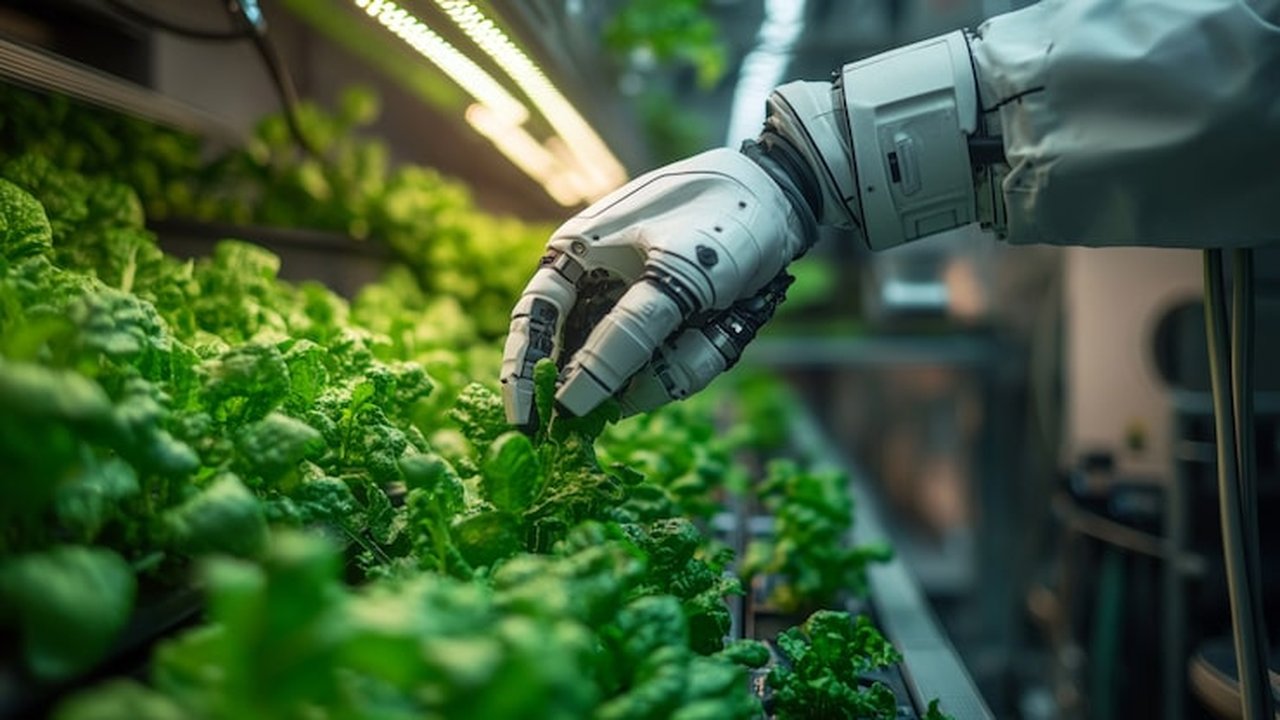
 Artificial Intelligence (AI) is revolutionizing the food industry, but have you heard of agentic AI? Beyond chatbots, agentic AI is reshaping productivity and decision-making for giants like Nestlé and Danone. With its autonomous capabilities, agentic AI streamlines tasks, boosts personal productivity, and enhances decision-making processes. As these industry leaders pilot agentic AI, the future of food production and management looks increasingly efficient and strategic.
Agentic AI Enhancing Productivity
Agentic AI is revolutionizing the food industry by enhancing productivity through streamlined processes and reduced workloads. Companies like Nestlé and Danone are at the forefront of this transformation, leveraging agentic AI to empower their employees and optimize operational efficiency. Nestlé, with over 100,000 AI users, is incorporating agentic elements into employee self-service, particularly in HR services. By automating repetitive tasks, such as sales processes, Nestlé's sales teams can now focus more on customer engagement and strategic growth initiatives. Similarly, Danone is piloting agentic AI across various operations to support productivity, indicating a shift towards more efficient and agile business practices within the industry.
Agentic AI's ability to streamline tasks not only improves operational efficiency but also empowers employees to focus on value-adding activities, ultimately driving business growth. As companies like Nestlé and Danone continue to explore the potential of agentic AI, the future of the food industry is poised to witness significant advancements in productivity and operational excellence.
Agentic AI Facilitating Decision-Making
Beyond enhancing productivity, agentic AI is playing a crucial role in facilitating decision-making processes within food companies. Nestlé and Danone are utilizing agentic AI to collaborate with human teams and enhance decision-making across various functions. Nestlé, for instance, is leveraging agentic AI in finance to assist managers in making informed decisions related to working capital, risk management, and capital allocation. By consolidating key insights and generating consistent reports, agentic AI enables a more holistic view for decision-makers, leading to more strategic and data-driven choices.
Similarly, Danone is harnessing agentic AI to analyze production data, simulate scenarios, and identify areas for operational improvement. By providing actionable insights to teams, Danone's AI system is instrumental in driving efficiency, reducing waste, and optimizing operational performance. With agentic AI evolving rapidly, these early initiatives by industry leaders like Nestlé and Danone are paving the way for more sophisticated decision-making processes that are underpinned by data-driven intelligence.
Evolution of Agentic AI in the Food Industry
As AI continues to evolve, the capabilities of agentic AI are expected to progress alongside it, offering even more sophisticated solutions for the food industry. The early pilot trials conducted by Nestlé and Danone today are laying the foundation for broader implementation of agentic AI in the near future. These trials not only demonstrate the feasibility of integrating agentic AI into existing operations but also highlight the potential for significant scalability and impact across various business functions.
The evolution of agentic AI in the food industry signifies a paradigm shift towards more autonomous and intelligent decision-making processes. By combining human oversight with AI capabilities, companies like Nestlé and Danone are positioning themselves at the forefront of technological innovation, setting the stage for a future where agentic AI plays a central role in driving strategic growth and operational efficiency.
Conclusion
The integration of agentic AI in the food industry, as exemplified by Nestlé and Danone, marks a transformative shift towards enhanced productivity and strategic decision-making. By streamlining operations and empowering employees, agentic AI not only drives efficiency but also fosters a culture of innovation and growth. As these industry leaders pioneer the adoption of autonomous AI, the future holds promise for a more intelligent, sustainable, and transparent global food supply chain. Embracing agentic AI is not just a technological advancement but a strategic imperative for companies seeking to thrive in an increasingly competitive landscape, where agility and data-driven insights are paramount for success.